

Banks may refuse to honor such checks, disrupting financial planning and cash flow management. Businesses need clear policies for tracking outstanding checks to mitigate these risks. Educating staff on the importance of timely and accurate financial reporting can also play a crucial role in avoiding outstanding check issues. When employees understand the impact that these checks have on the company’s financial clarity, they are more likely to adhere to best practices in payment processing and record-keeping. This cultural shift towards financial diligence can lead to more consistent monitoring and quicker bookkeeping and payroll services resolution of outstanding items. Advanced accounting software can streamline the recognition of outstanding checks.
How Kevin Passed the CPA Exams in 6 Months

At first glance, this may seem like a positive turn of events for the payer. As long as you know not to spend money promised to someone else, avoiding expensive consequences such as overdrafts or insufficient funds fees is possible. Putting a stop payment on a misplaced or stale check may prevent issues down the road, especially if there’s a concern that it could fall into the wrong hands.
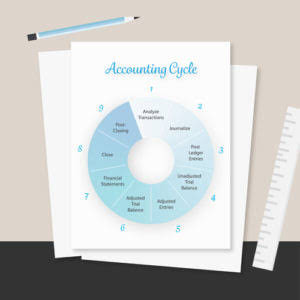
Examples for Checks Carried Over, Checks Begun, Checks Paid,
Check out the articles provided by my colleague above for more reference on managing transactions in QuickBooks Online. Deleting previous unclear transactions may cause serious complications. Go to the Chart of Accounts, select the bank, outstanding checks and locate these transactions. Select it repeatedly click on the check column until you see the letter C. However, when I generated the reconciliation report, I see more than $530K in uncleared cheques and $80K in uncleared deposits. You can use FCHN to see how many checks have been issued to vendor so far and how many checks are outstanding for the vendor.
Best Practices for Managing Outstanding Checks
- If you’ve received an outstanding check, deposit or cash it promptly.
- Then, regularly review your bank statements and reconcile the balance, deposits, and withdrawals with your records.
- An uncashed check can distort these projections, causing businesses to misjudge their financial position.
- At first glance, this may seem like a positive turn of events for the payer.
- These laws often require businesses to conduct due diligence, which includes making reasonable efforts to locate and notify the rightful owners before surrendering funds to the state.
- Outstanding personal checks can cause budgeting problems, but you may have an easier time reminding a friend or family member to cash a check than a business payee.
There is a discrepancy between what your checkbook or accounting system says you have in your account and what the bank reports on your monthly statement. One of the main differences are the outstanding checks that have been recorded in the accounting system but haven’t been recorded by the bank. Another useful practice is to write “outstanding” on the memo line of the check when you write it so you can easily track every check you write.

AccountingTools

Outstanding checks are significant in bank reconciliation since they can cause discrepancies between your bank balance and your own financial records. Another option is to request a stop payment on a stale or voided check to ensure no one can cash or deposit it. This may be necessary if you’ve waited months or longer and can’t get closure for the check. Anytime you make this request, mark it in your accounting software or ledger as “canceled.” Doing so allows this money to be made available again.
- Timing differences and recording errors can further complicate reconciliation.
- These entries are still showing as uncleared (uncleared payments total $531,000!!!).
- Some checks become stale if dated after 60 or 90 days, while others become void after six months.
- When a business writes a check, it deducts the amount from the appropriate general ledger cash account.
- Instead, they consider it during the bank reconciliation process to ensure that the cash balance reported on the balance sheet is accurate.
- For instance, checks might be getting mailed to incorrect addresses or not being issued promptly.
- Outstanding checks are checks written by a company, but the checks have not cleared the bank account.
- Meanwhile, you must keep enough money in your account to cover the check when it is finally deposited.
- Banks set their own policies for how long they consider a check valid.
- You’ve probably seen a check lying around that hasn’t been cashed yet.
We answer your questions about this financial term and what retained earnings balance sheet to do when managing an outstanding check. A check is a financial instrument that authorizes a bank to transfer funds from the payor’s account to the payee’s account. When the payee deposits the check at a bank, it requests the funds from the payor’s bank, which, in turn, withdraws the amount from the payor’s account and transfers it to the payee’s bank. When the bank receives the full amount requested, it deposits it into the payee’s account.
Add a Comment